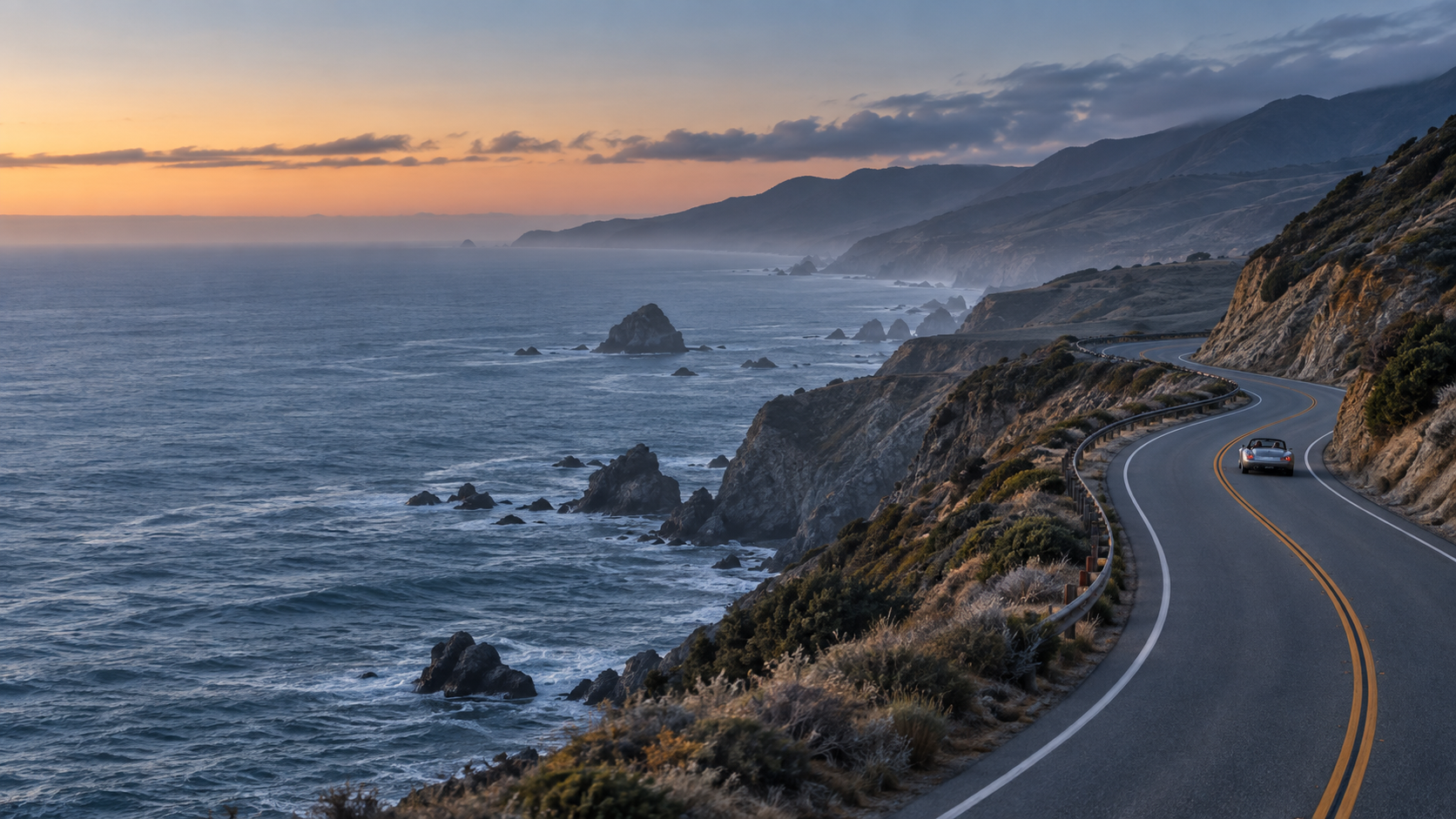
The long way to Napa: roof down, room for six, or everything in between
Plan an LA-to-Napa road trip around the car you actually need: a convertible, a van or a three-row SUV, with coastal stops and an inland backup.
First, give the coast enough days
The luggage test is a good place to start. Put two soft weekend bags beside a roadster and the trip almost writes itself: a small hotel, a late lunch, a reason to leave the roof open. Add four adults, a stroller and several hard cases and the same route becomes a different proposition. California has room for both trips. The mistake is booking one car and packing for the other.
Our suggested loop takes five or six days from Los Angeles. Use Santa Barbara and the Central Coast as places to stay, not boxes to tick on a single heroic driving day. Give Napa at least a full day with no long transfer attached, then return inland if the clock is running short. These are planning recommendations, not a timed road test.
A coastal loop needs a Plan B
Build the northbound route around Los Angeles, Santa Barbara, San Luis Obispo and Monterey before continuing toward Napa. Highway 101 provides the inland connection when coastal access is unavailable. Choose individual Highway 1 outings only after checking their current access from the relevant side.
At our September 2026 check, California State Parks was reporting a Big Sur closure. Do not read a line drawn on an old itinerary as proof that Highway 1 is open end to end. Check Caltrans immediately before travel and follow the signed diversion. A closed road also changes which lunch stop is sensible; book flexible meals on your transfer days.
The convertible makes a smaller trip feel bigger
A two-seat roadster is the romantic choice for two people travelling light. A four-seat convertible such as the fleet’s Mercedes-AMG CLE offers another layout, but it is still worth checking the luggage space with the roof in its intended position. Rear-seat capacity on a listing is not a promise that four adults will enjoy several long transfer days.
Pack a light layer where you can reach it. Ocean air and an inland afternoon can feel like different seasons. Keep the roof decision practical, especially when the car is parked with luggage inside. For this trip, the pleasant hour on a coastal road matters more than chasing a performance figure.
The van and the three-row SUV have different jobs
A passenger van earns its place when people and their bags both need room. Compare the actual seat layout, rear luggage area and parking height before booking; “van” covers very different vehicles. A tall roof can turn a reserved hotel garage into an arrival problem.
An Escalade or a three-row Range Rover is a comparison category here, not confirmed Sketchy Rides inventory. Check the exact version: not every Range Rover has a third row, and a raised third row uses luggage space. For a mixed-age group, test access to the back seats and decide who sits there before the long day. A smaller luxury sedan is the overlooked alternative for two or three adults who value a quiet transfer more than an open roof.
Lunch, fuel and the last evening
Make Santa Barbara or San Luis Obispo your unhurried meal stop on the first leg. In Napa Valley, use the destination’s dining and scenic-drive guides to choose one area for the day. If tastings are involved, arrange a non-drinking driver or separate local transport. The rental car can stay parked.
For fuel, compare live prices before leaving a service town and use the grade specified for your vehicle. We do not name a permanent “cheapest station”: prices, membership requirements and opening hours change. A small saving is easily lost on a long detour. Add rental mileage charges to the calculation; the lower daily rate is not always the lower price for a California loop. Keep the final evening free of a fixed distant attraction so the return does not depend on perfect traffic.